REVENUE OPERATIONS ENGINE BUILT FROM SCRATCH
5,000+ MQLs Generated,
17% Lead-to-Deal Uplift,
Double-digit Rev Growth
The Challenge: A System That Was Never Built
Manycore Tech, a PLG-driven B2B SaaS platform where B2B accounts drove 90% of revenue, had hit a growth ceiling. The PLG engine attracted users efficiently but had no infrastructure to convert them into enterprise accounts. The result was a revenue system that had never been properly instrumented:
→ Lead-to-customer conversion below 2%, with no visibility into where or why deals dropped
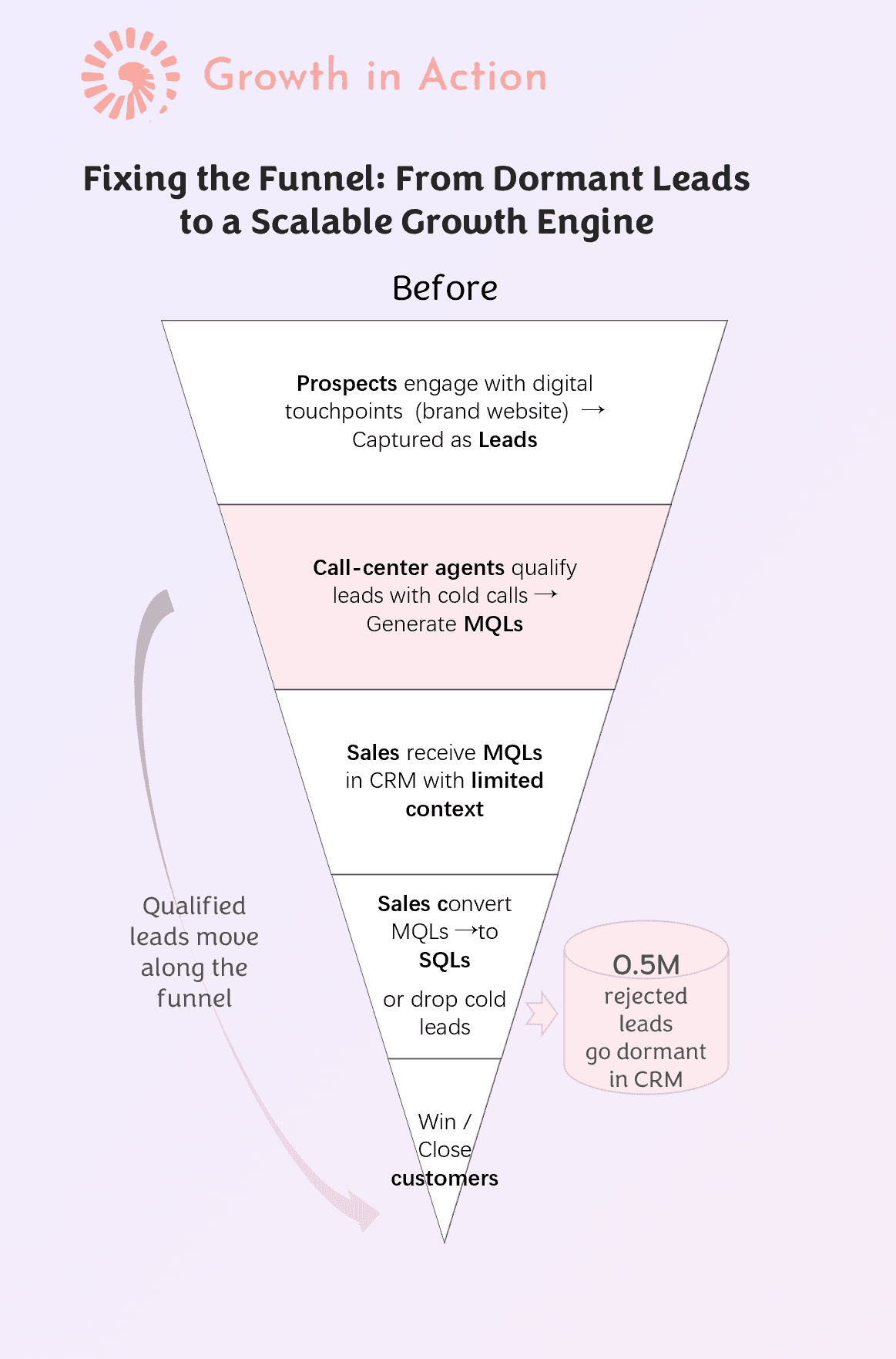
→ 500,000 leads accumulated in CRM with no engagement history, expired intent signals, and no routing logic
→ 98.5% of acquisition budget was generating pipeline that immediately went dormant
→ No lifecycle model, no scoring, no SDR function, no closed-loop feedback between marketing and sales
The instinct was to treat the 500K leads as an untapped asset and launch reactivation campaigns. Cold calling, then voice AI outreach. Both failed -- not from poor execution, but from a flawed premise. Dead databases cannot be personalized against. The real problem was that the revenue system had never existed in the first place.
The reframe that changed everything: this was not a reactivation problem. It was a prevention problem dressed as one. We stopped trying to fix the past and built the infrastructure to prevent dormancy going forward.
The Architecture: A Three-Layer Pipeline Infrastructure
The engagement was structured as a full RevOps build: diagnosis first, then system design, then human process layer, then measurement. Not a campaign. Not a quick fix.
Layer 1: Diagnosis and System Design
→ Ran cross-functional journey mapping to identify every drop-off point across the funnel
→ Designed an MVP pilot to validate the approach and ICP segmentation before full-scale rollout
→ Selected and partnered with Convertlab (CDP + marketing automation, equivalent to HubSpot + Segment) as the core infrastructure layer
→ Defined a 7-stage lifecycle model with persona-specific scoring, tagging, and engagement thresholds
Layer 2: Data and Automation Infrastructure
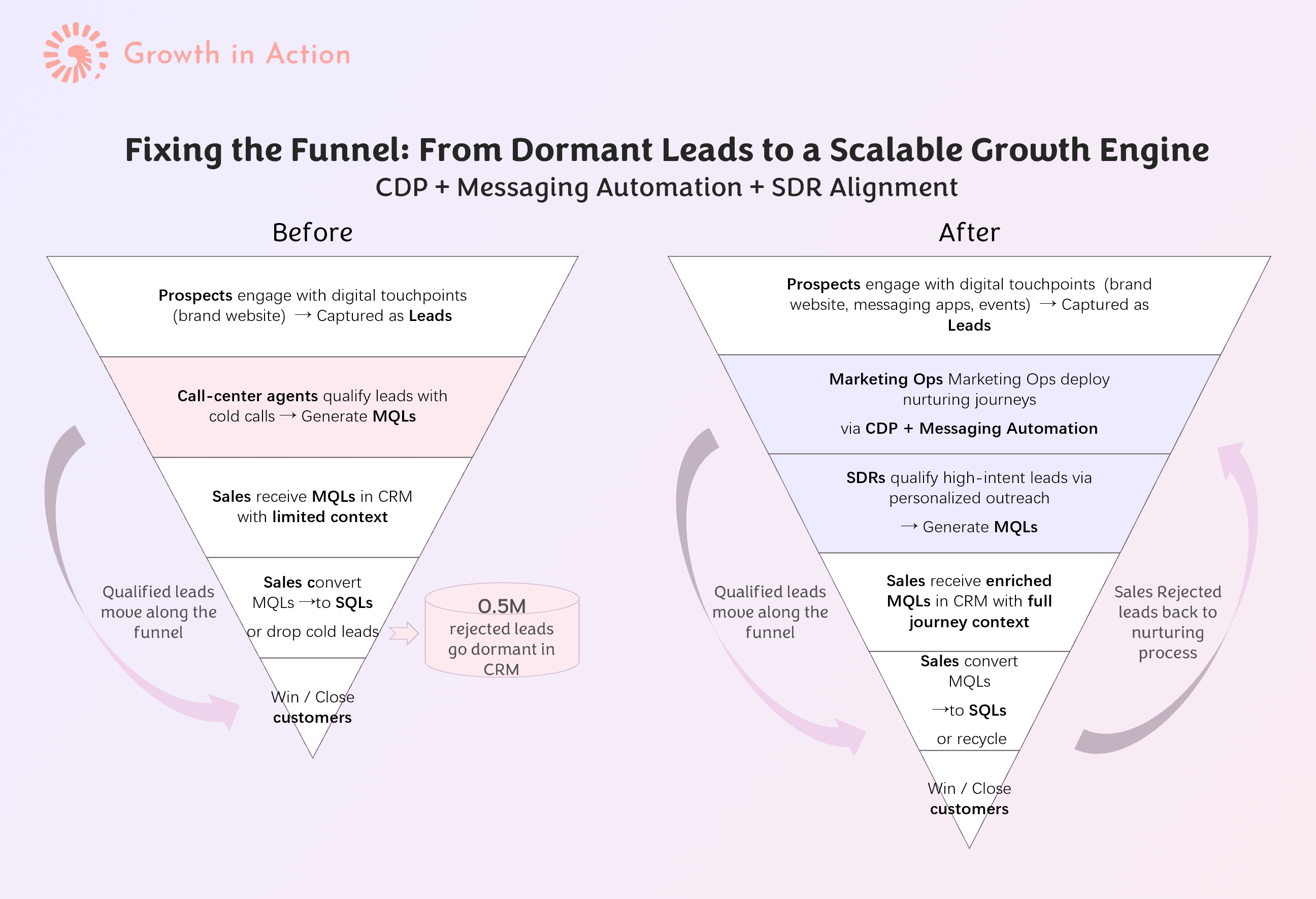
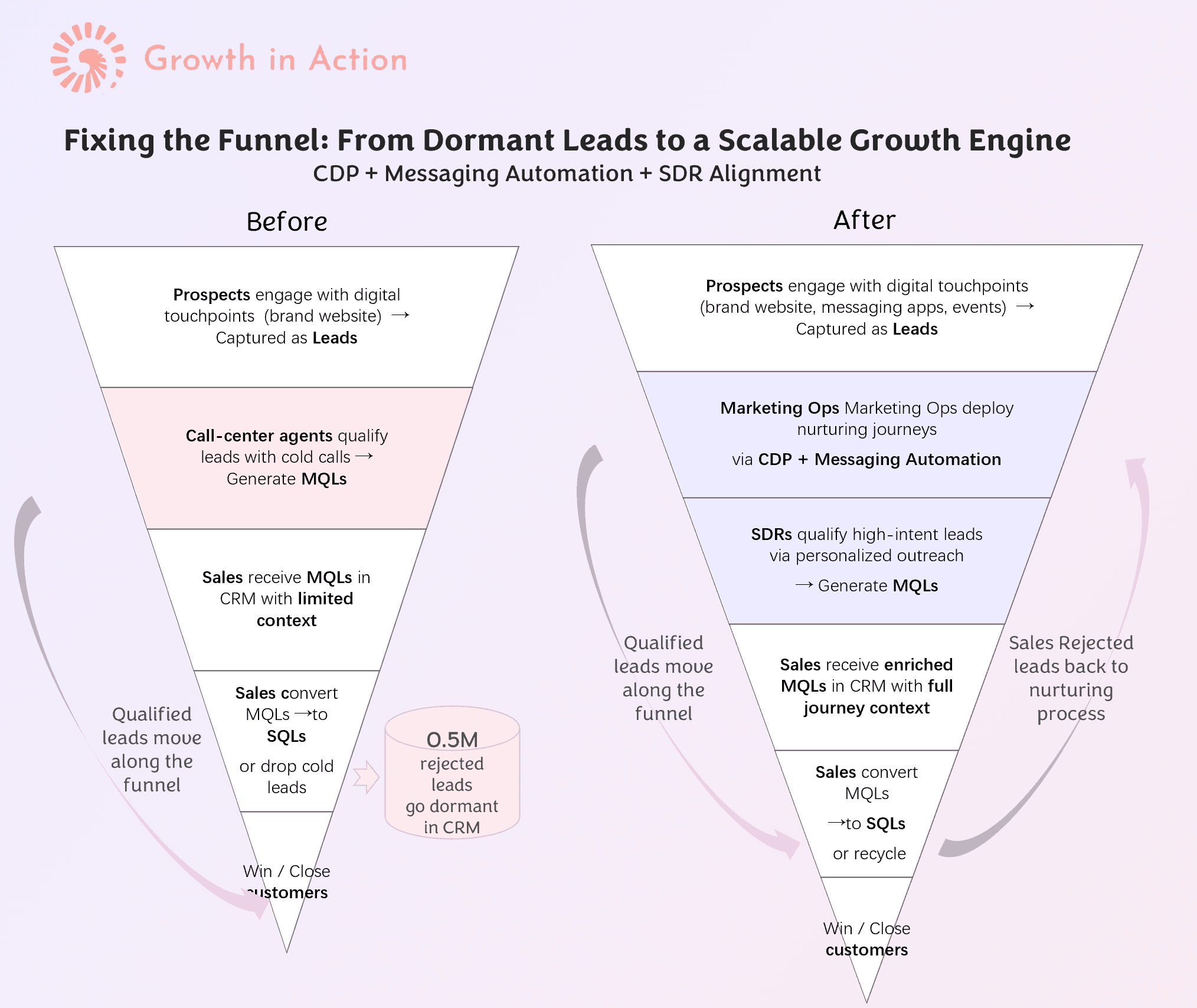
→ Unified behavioral and identity data across website, CRM, and enterprise messaging platform into Convertlab CDP -- creating a single source of truth for lead state
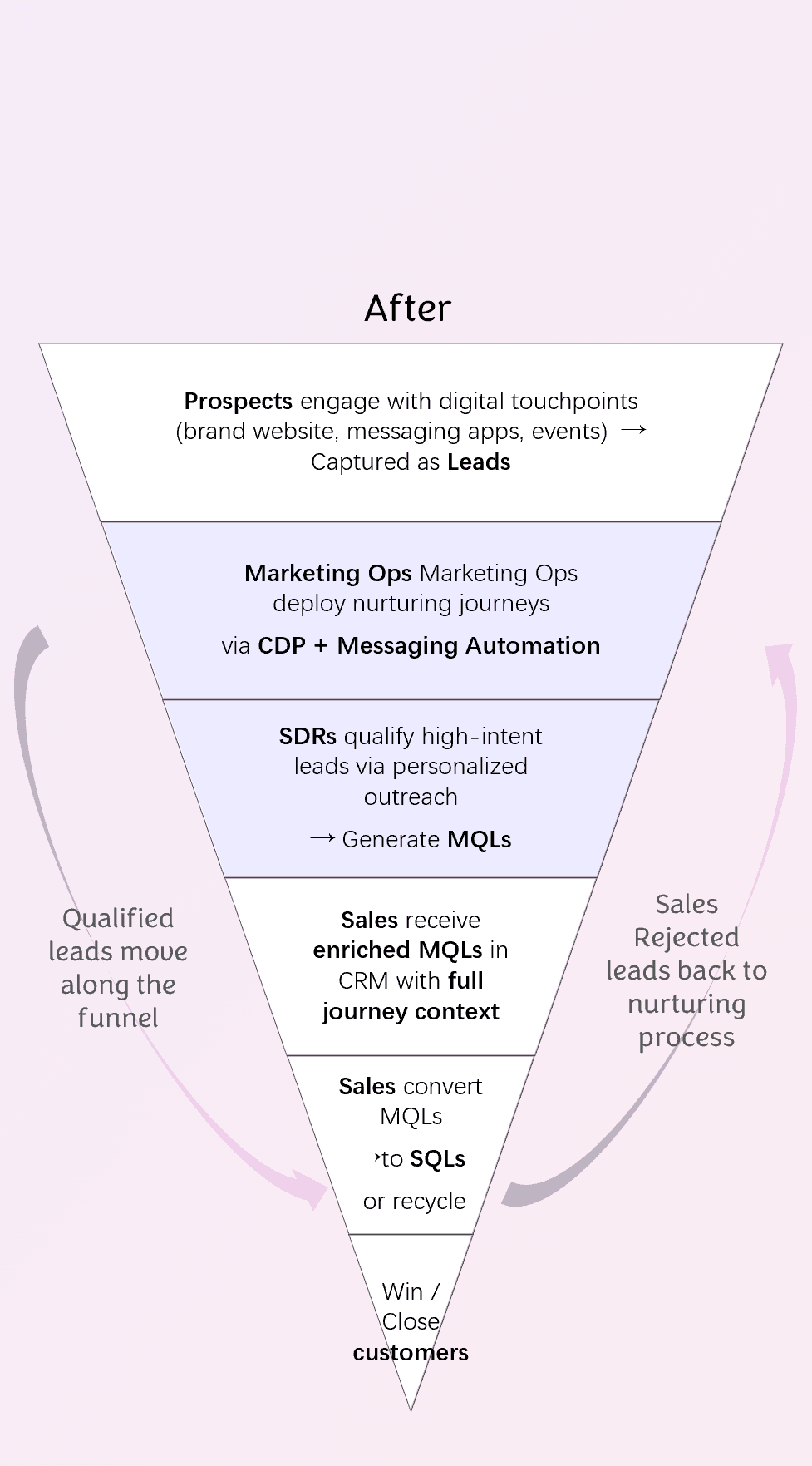
→ Built automated nurture flows triggered by engagement score and funnel stage, not by time or batch logic
→ Integrated CDP with CRM so that every sales-facing record carried full journey context: touchpoints, score, stage, messaging history
→ Designed closed-loop routing: sales-rejected leads automatically re-entered nurture rather than going permanently dormant
Layer 3: Human Process and Cross-Functional Alignment
→ Built the SDR function from scratch to manage hot leads surfaced by nurture flows -- replacing cold call volume with intent-triggered outreach
→ Designed SDR process for trial activation support, intent qualification, and warm handoff to sales
→ Developed routing logic and handoff triggers so sales received enriched MQLs with full context, not just a name and a number
→ Ran stakeholder workshops to align marketing, SDR, and sales on shared definitions, data standards, and pipeline goals
The new Revenue Operations engine fundamentally transformed our growth trajectory, delivering multi-million dollar impact:
Nuturing Database
200,000
MQL Generation
↑5000+ annually
Conversion Rate
↑17% (lead-to-deal)
Revenue Growth
↑11% YoY (multi-million USD impact)
Sales Efficiency
-Shorter sales cycles driven by intent-triggered SDR outreach replacing cold volume
+Sales-rejected leads systematically recycled into nurture, eliminating permanent pipeline leakage
Funnel Visibility
Full lead journey traceability implemented for the first time across marketing, SDR, and sales
Prevention > Reactivation
A database that has gone cold cannot be revived by better tooling. The winning move is building the infrastructure that prevents leads from going cold in the first place. Reactivation is always more expensive and less effective than prevention.
The reframe is the intervention
Shifting the question from 'how do we recover these leads' to 'why did we lose them' transformed a campaign into an infrastructure project. Most B2B revenue problems are systems problems disguised as execution problems.
Systems amplify human judgment, they don't replace it
The automation layer surfaced intent. The SDR layer converted it. Neither worked without the other. Durable pipeline infrastructure requires both the automated signal and the human response designed into the system from the start.
Closed-loop routing is non-negotiable
A funnel without a feedback loop is just a leaky bucket with extra steps. Routing rejected leads back into nurture -- rather than dropping them -- was one of the highest-leverage design decisions in the entire build.